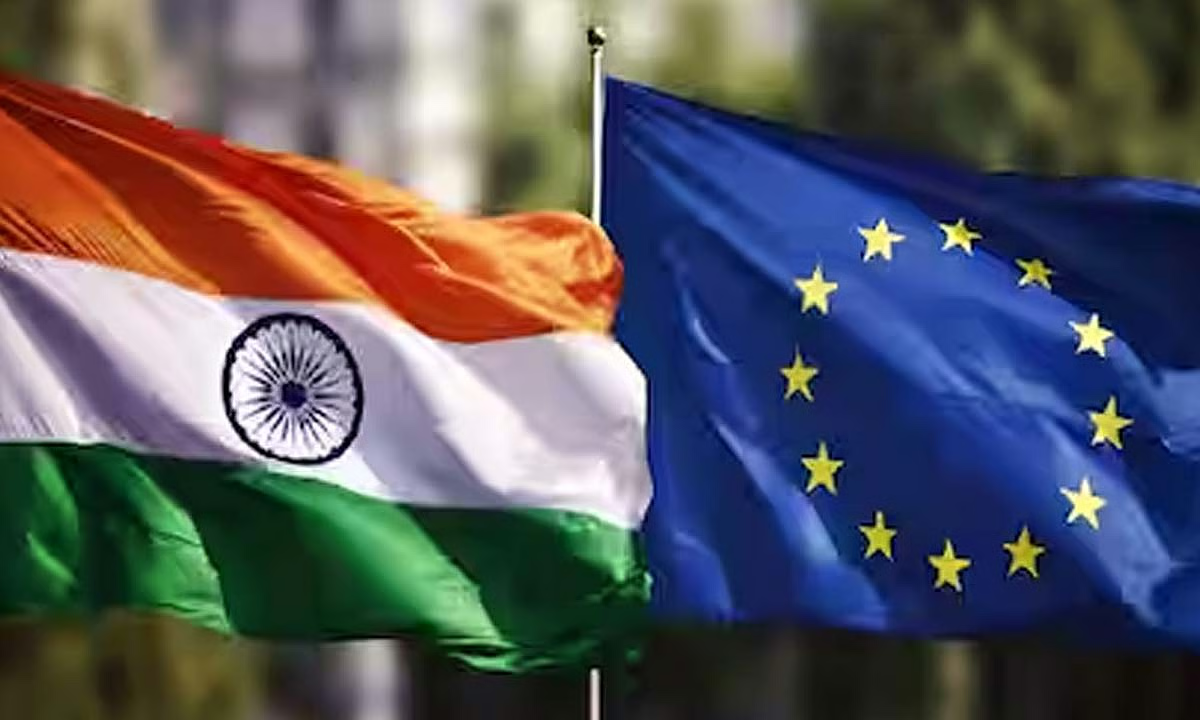
India and European Union Expected to Sign Landmark Trade Agreement on December 16
India and the European Union are expected to sign a long-awaited Free Trade Agreement (FTA) on December 16, marking a significant development in their economic and diplomatic relations. The proposed agreement is expected to be signed during Indian Prime Minister Narendra Modi’s anticipated visit to Brussels. The pact aims to strengthen commercial ties, expand market access and encourage greater investment between India and the 27-member European bloc.
The agreement represents an important breakthrough after nearly two decades of negotiations. Discussions between the two sides began in 2007 but were suspended in 2013 due to differences over several trade-related issues. Negotiations resumed in 2022, gaining momentum as both parties recognised the importance of establishing stronger economic partnerships amid changing global trade conditions. The negotiations were concluded on January 27, 2026, paving the way for the proposed signing.
The trade pact is expected to provide substantial benefits to Indian exporters by improving access to European markets and reducing customs duties on a wide range of products. Around 93 per cent of India’s exports to the European Union are expected to benefit from duty-free access. Key sectors likely to gain include textiles, garments, leather products, footwear, chemicals, engineering goods, pharmaceuticals, gems and jewellery. Lower trade barriers could help Indian manufacturers improve their competitiveness and attract new international buyers.
European businesses are also expected to gain better access to the rapidly expanding Indian market. Reduced import duties could create new opportunities for European automobile manufacturers, machinery suppliers, wine producers and exporters of premium consumer products. The agreement is expected to encourage European companies to increase their commercial presence in India while strengthening cooperation in manufacturing, technology and industrial development.
Together, India and the European Union represent a market of approximately two billion people and account for a significant share of the global economy. The agreement is therefore expected to create considerable opportunities for businesses on both sides by simplifying trade procedures, reducing commercial barriers and encouraging cross-border investments. Small and medium-sized enterprises could also benefit from improved access to new customers and international supply networks.
Apart from merchandise trade, the partnership is expected to strengthen cooperation in several important areas, including renewable energy, infrastructure, digital technology, financial services, advanced manufacturing and pharmaceuticals. Greater collaboration in these sectors could support innovation, encourage technology transfers and generate additional investment opportunities. Both sides are also looking to diversify their supply chains and reduce excessive dependence on individual markets.
The agreement is particularly important at a time when global businesses are seeking more reliable trading partners and alternative supply chain arrangements. For India, stronger economic engagement with Europe could support its manufacturing ambitions, increase export earnings and attract foreign investment. For European countries, the Indian market offers considerable potential for business expansion, industrial partnerships and long-term commercial growth.
Following the expected signing, the agreement will have to complete the remaining approval procedures, including the required European Parliament consent and India’s domestic formalities, before it can officially take effect. Both sides are aiming to bring the arrangement into operation during 2027, subject to the completion of these procedures.
The proposed December 16 signing is expected to mark a new chapter in India-EU relations, creating a stronger foundation for trade, investment and industrial cooperation. Once implemented, the agreement could deliver long-term economic benefits, improve business opportunities and strengthen the position of both India and Europe in the global marketplace.


Post Comment